Transformation is one of those themes that keeps finding its way back into my work, even when I’m not consciously planning for it.
I notice it in the concepts I’m drawn to, in the people I connect with most, and in the images that stay with me long after a shoot is over. Again and again, I find myself interested in the in-between moments — the ones where something has shifted, but hasn’t fully settled yet.
That space feels deeply human to me.
I think a lot of people imagine transformation as something dramatic. A before and after. A big breakthrough. A visible reinvention. And sometimes it is. But more often, at least from what I’ve seen and felt, transformation is quieter than that.
Sometimes it looks like grief.
Sometimes it looks like motherhood.
Sometimes it looks like outgrowing a version of yourself that used to feel safe.
Sometimes it looks like coming back to your body after a hard season.
Sometimes it looks like realizing you can’t go back to who you were, even if you wanted to.
That kind of change doesn’t always have language right away. It can be confusing, tender, messy, and unfinished. And I think that’s part of why I’m so drawn to photographing it.
I’m not really interested in perfection. I’m much more interested in what feels true.
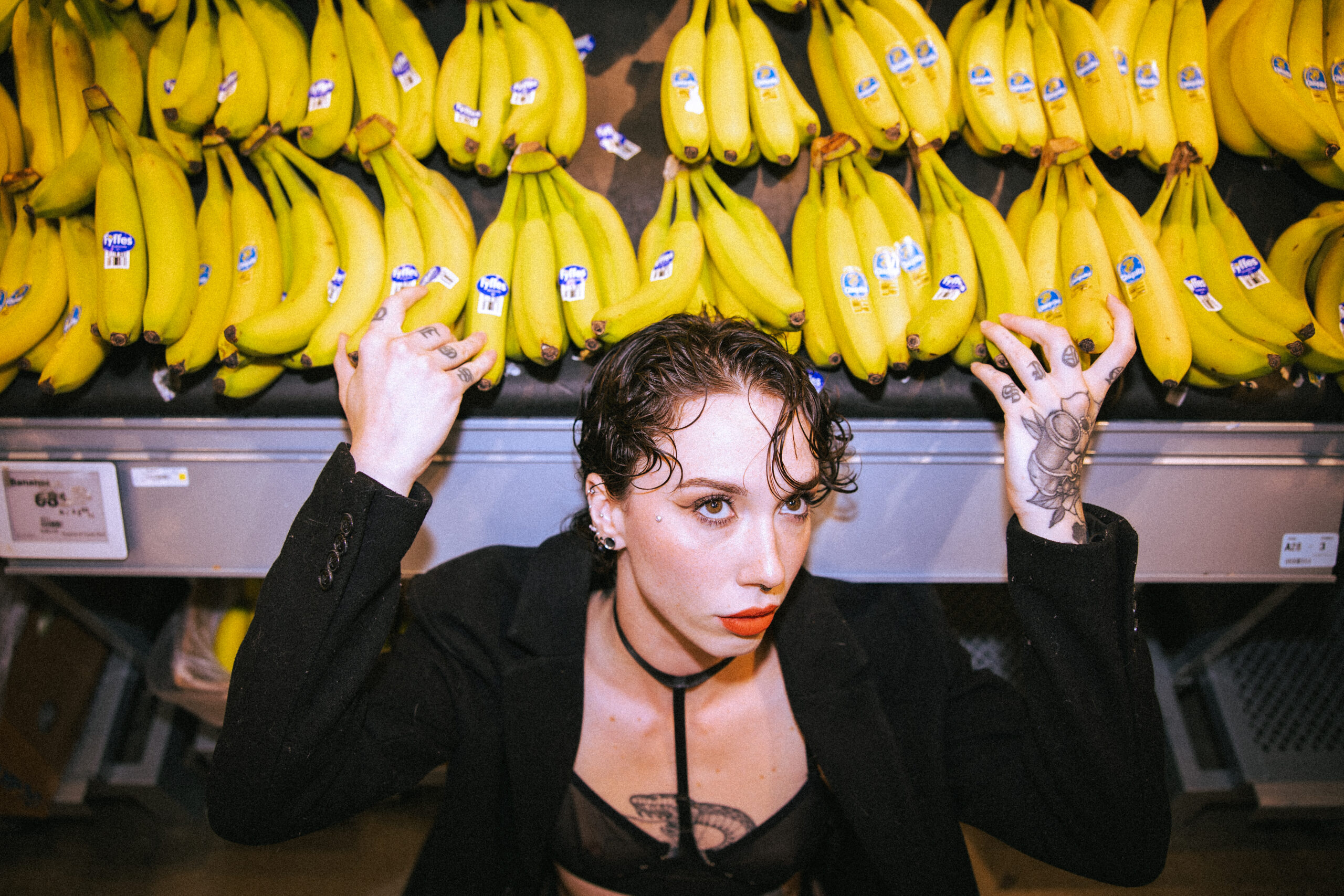
That’s probably why conceptual portraiture feels like such a natural fit for me. It gives me space to work with emotion, symbolism, movement, and atmosphere without needing to flatten everything into something neat and easy to explain. A person can be soft and powerful at the same time. Grieving and growing. Lost and becoming. Photography can hold that complexity in a way I really love.
A lot of the people I’m drawn to photograph are in some kind of transition, even if they don’t arrive describing it that way.
Sometimes they come in with a concept that’s clearly about change. Other times it’s less obvious at first. But underneath the styling, the location, the movement, or the objects we choose, there’s often this deeper thread: something is shifting. Something is being released, reclaimed, mourned, or reimagined.
That’s the part that interests me most.
I think this also connects to why movement matters so much in my work.
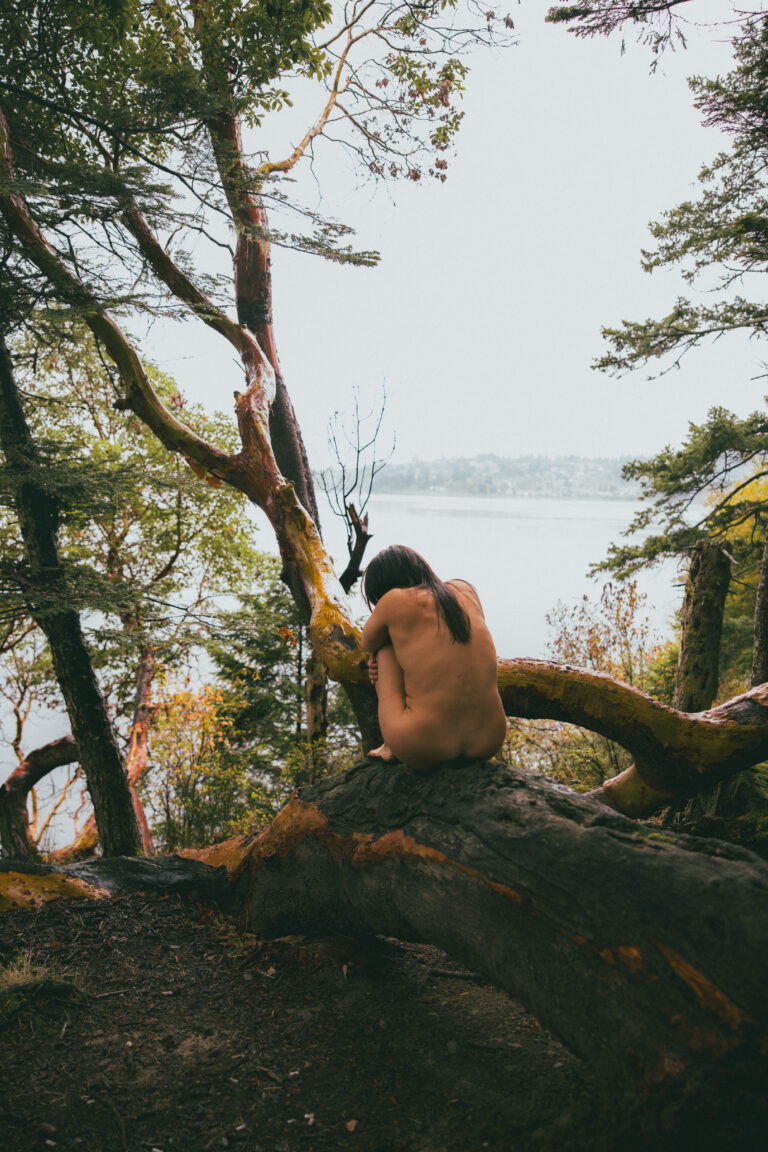
Transformation is rarely static. Even when someone is standing still, there’s often something happening in the body — tension, resistance, softness, a kind of reaching, a pulling inward, a settling, an opening. Movement lets me work with that. It makes space for emotion to live in the image, not just on the face.
Sometimes a concept is built around a very obvious symbol — flowers, earth, water, mirrors, thread, fabric, fire. Other times the symbolism is more subtle. But I’ve noticed I keep returning to visual elements that hold the feeling of becoming. Things that change shape. Things that grow. Things that blur the line between destruction and renewal.
Water is one of those for me.
Earth is another.
Flowers, too.
Even low light can feel transformative — it hides some things, reveals others, softens edges, changes the atmosphere completely.
I’m drawn to images that feel like they are in the middle of something.
Not posed at the end.
Not polished into certainty.
But alive inside the process.
I think that’s also why I’m so interested in people who want more than a standard portrait. They’re often not just looking for something beautiful. They’re looking for something that feels honest. Something that reflects a part of their experience, even if that experience is still unfolding.
And honestly, I relate to that.
I think a lot of my own creative process has been shaped by trying to understand what lives beneath the surface — in people, in movement, in stories, and in myself. Photography has become one of the ways I do that. Not by explaining everything, but by making space for feeling, metaphor, and image to meet.
That’s what transformation means to me in this context. Not just change for the sake of change. Not an aesthetic before-and-after. But the emotional and physical reality of becoming someone new, or seeing yourself differently, or carrying the weight of something that has already changed you.
Sometimes that transformation is beautiful.
Sometimes it’s painful.
Usually it’s both.
And I think that’s why it continues to return in my work. Because it feels real. Because it asks something deeper of the image. Because it lets photography become more than documentation.
It becomes a way of witnessing.
A way of saying:
something happened here.
something shifted.
this mattered.
I don’t think every portrait needs to be about transformation. But for me, the ones that stay in my heart usually are.
They hold that feeling of becoming.
Of crossing into something new.
Of being in the middle of change and letting that be seen.
That’s the work I keep returning to.
And I think, in a lot of ways, it’s the work I’ll keep returning to for a long time.
A final thought
Transformation doesn’t always arrive loudly. Sometimes it looks like a quiet shift, a new tenderness, a different way of standing in your own body, or the slow realization that something inside you is no longer the same.
Photography, for me, is one way of honoring that.
Not by forcing it into a clean story, but by giving it shape — and letting it be witnessed.
“Every artist was first an amateur.”